

April Fools Proof Your Funnel With Trust Signals
Posted: April 1, 2026 to Insights.
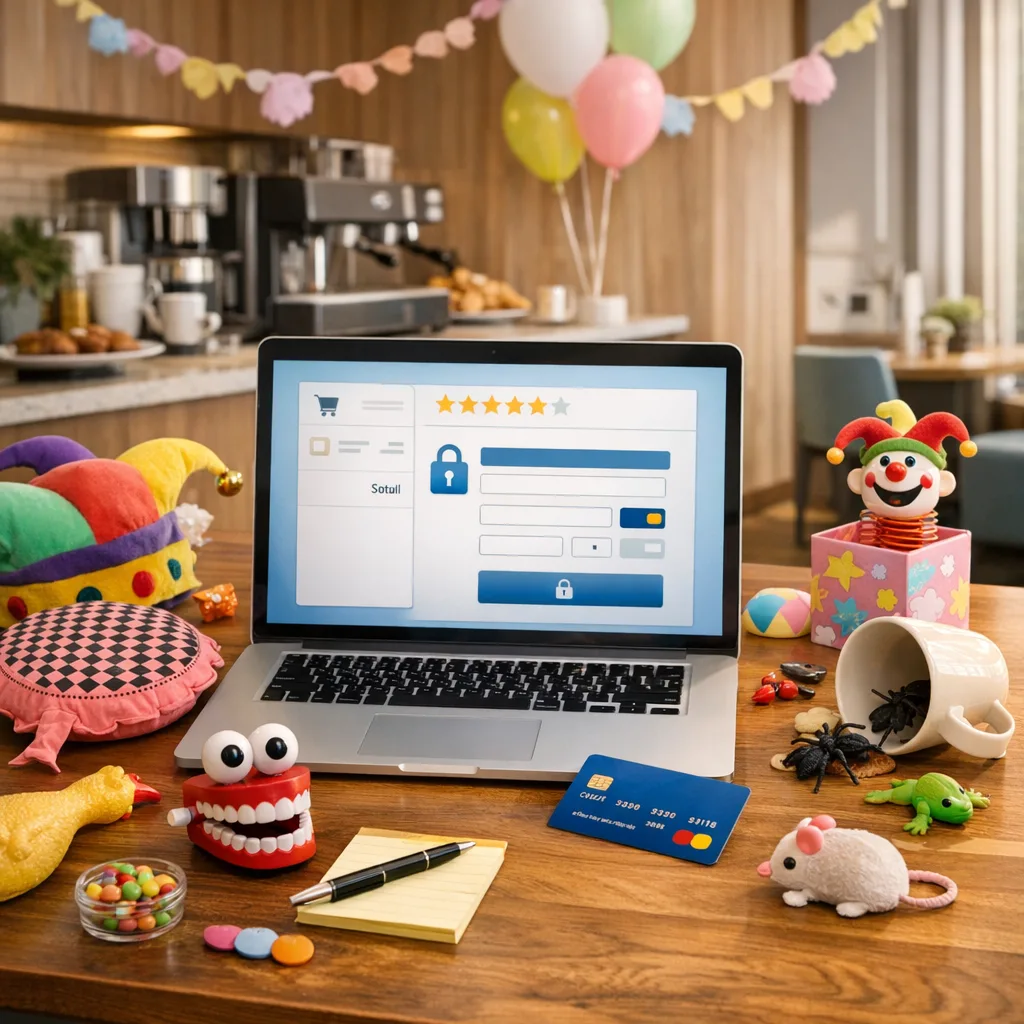
April Fools Proof Your Funnel with Trust Signals
April can be rough on conversion rates. Audiences are already skeptical, inboxes fill with fake product launches and prank offers, and even legitimate promotions can trigger a second glance. That skepticism does not disappear on April 2. It lingers, especially for new visitors who have never heard of your brand and are deciding in seconds whether your offer feels credible or risky.
A funnel that looks polished but feels unverified can lose buyers at every stage. People click an ad, skim a landing page, compare prices, open a checkout, and quietly back out because one small doubt goes unanswered. Is this company real? Will the product match the promise? Can I get support if something goes wrong? Trust signals exist to answer those questions before friction turns into abandonment.
Trust signals are the visible proof points that reduce uncertainty, from customer reviews and secure checkout badges to transparent shipping policies, recognizable client logos, founder bios, media mentions, and plain-language guarantees. Used well, they don't just decorate a page. They support claims, validate intent, and show that a business respects the buyer's need for reassurance.
Why skepticism spikes in your funnel
Every funnel asks a prospect to take a series of small risks. Clicking an ad risks wasted time. Joining an email list risks spam. Starting a free trial risks future charges. Entering payment details risks money, privacy, and disappointment. During periods associated with jokes, gimmicks, and bait-and-switch campaigns, those risks feel sharper.
That matters because many conversion problems are not messaging problems alone. A headline can be strong and an offer can be relevant, yet the page still underperforms because the prospect cannot verify what they're reading. Claims without proof invite hesitation. Vague promises such as "trusted by thousands" or "best-in-class support" often create more questions than confidence unless the page shows evidence nearby.
Trust weakens when pages feel anonymous, inconsistent, or too good to be true. A social ad with one tone that leads to a generic landing page creates dissonance. A discount timer that resets on refresh can look manipulative. A checkout page without recognizable payment methods can feel risky. Minor details compound, and the cumulative effect can be costly.
What counts as a trust signal
Trust signals fall into a few broad categories, and the strongest funnels usually combine several instead of relying on one. Social proof tells visitors other people have already chosen you. Operational proof shows the business can deliver what it promises. Risk-reduction proof addresses what happens if the purchase goes wrong. Identity proof answers who is behind the brand. External validation shows that third parties, customers, publications, certifiers, or partners, can vouch for you.
- Customer reviews, ratings, and testimonials
- Case studies with concrete outcomes
- Secure payment icons and SSL indicators
- Clear return, refund, shipping, and cancellation policies
- Media coverage, awards, certifications, or association memberships
- Client logos, partner logos, or app marketplace ratings
- Founders, team photos, real contact details, and support hours
- User-generated content, before-and-after examples, and product demos
Not all signals carry equal weight. A five-star graphic without context is weak. A detailed review that mentions the customer's use case, concern, and result is far more persuasive. A generic "as seen in" strip can feel ornamental. A linked press mention from a recognized publication has more credibility. Substance beats decoration.
Match the signal to the stage of the funnel
One reason trust efforts fail is poor placement. Teams often load their homepage with badges and neglect the points where doubt actually peaks. Trust should appear where resistance is strongest.
At the top of the funnel, people want to know if the brand is legitimate and relevant. Ads, social posts, and first-touch landing pages benefit from light but immediate validation, such as recognizable customer logos, star ratings tied to a real review count, a concise statement of who the product serves, and a visible path to learn more about the company.
Mid-funnel visitors need evidence that the solution works for someone like them. This is where testimonials, comparison tables, product walkthroughs, case studies, and use-case examples do heavy lifting. If someone is evaluating a project management tool, for example, they need more than "teams love us." They respond better to a quote from an operations lead explaining how onboarding took two days instead of two weeks, plus screenshots or a short demo showing the actual workflow.
Bottom-of-funnel pages carry the most purchase anxiety. Here, buyers want reassurance on payments, fulfillment, support, and reversibility. Checkout pages should make refund windows, accepted payment types, delivery estimates, and support contacts easy to find. Hidden policies create doubt. Visible policies reduce it.
Landing pages, where belief is won or lost
A landing page often has one job, but trust usually breaks because the page tries to do persuasion without verification. The claim appears first and the proof is buried far below, or the page uses broad superlatives with no specifics. A better approach is claim, proof, clarity, then action.
Imagine a landing page for a tax filing app running in early April. The headline promises fast filing and maximum deductions. That's useful, but the visitor's real concern is larger: accuracy, data security, and support if an issue comes up. A stronger page would place trust right next to the promise. That could include security certifications, average review scores from a known review platform, a short line about expert support availability, and a link to transparent pricing before the first call to action.
Visual consistency matters too. If your ad uses a playful April Fools themed concept, the landing page should quickly confirm that the offer is real. A small line near the hero can do a lot of work: "Real pricing, real stock, no prank terms." Paired with customer reviews and an honest guarantee, it acknowledges the moment without sounding defensive.
Product pages need proof, not hype
Ecommerce brands often lose trust on product detail pages when they substitute adjectives for evidence. "Premium quality" means little on its own. Close-up photos, material details, sizing guidance, review snippets, return terms, and delivery timing mean more because they answer the practical questions behind the purchase.
Some of the best product pages use layered trust. The top of the page shows ratings and review count. The middle includes user photos or videos, sizing or fit notes, and shipping expectations. Lower on the page, shoppers find answers to objections, such as warranty information, care instructions, and return conditions. This structure works because it mirrors the shopper's mental process.
A skincare company, for instance, may see stronger performance when claims are linked to supporting details. Instead of saying a serum "transforms skin overnight," a page can note what users often report after a set period, include ingredient sourcing information, feature dermatologist testing if applicable, and show a range of customer experiences. That tone feels more credible and less promotional.
Checkout is where hidden doubt becomes abandonment
People abandon carts for many reasons, but trust gaps at checkout are easy to overlook because teams focus on forms and button color. Buyers who reach checkout are not done questioning. In many cases, this is the first moment they ask, "Am I comfortable giving this business my card?"
- Show secure payment options and recognized processors.
- Display total cost clearly, including shipping, taxes, and fees.
- Keep return and refund policies visible without forcing users to leave the page.
- Offer real support access, such as chat, phone, or email response expectations.
- Avoid manipulative urgency, especially timers that appear artificial.
One common trust leak is surprise cost. A shopper may accept a product price and still abandon the purchase when fees appear late. Another is unclear subscription language. If an order includes recurring billing, the terms should be plain, immediate, and impossible to miss. Short-term conversion gains from ambiguity often create chargebacks, support headaches, and reputation damage later.
Email sequences can either calm nerves or trigger suspicion
Trust doesn't belong only on-site. Email plays a huge role in validating your funnel, especially after opt-in and around abandoned carts, trials, demos, and post-purchase onboarding. Automated emails should sound like they come from a real company with real people and consistent intent.
Transactional emails are underrated trust builders. An order confirmation with complete item details, expected timelines, support contacts, and next steps tells customers they made a safe decision. A trial welcome email that explains exactly when billing starts, how to cancel, and where to get help reduces anxiety and lowers the chance that a subscriber feels tricked later.
Promotional email can also undermine trust if the tone turns too clever. April Fools campaigns often tempt marketers to use fake announcements or bait subject lines for attention. If your audience is already cautious, that short burst of novelty may cost more than it earns. Subject lines and preview text should make the real value obvious. Humor works better when the offer remains unambiguous.
How real brands often signal trust without overloading the page
Many established software and ecommerce companies tend to use trust in restrained, specific ways. SaaS brands often place customer logos near the hero, then reinforce those logos with measurable case studies later on. Retail brands frequently combine star ratings, review counts, shipping estimates, and easy returns near the buy button. Marketplace businesses usually emphasize buyer protection, seller ratings, and payment safeguards because transaction risk is central to the decision.
The lesson is not to copy the look. It is to copy the logic. Put the right proof next to the right hesitation. If the prospect fears poor fit, show sizing confidence and return ease. If they fear wasted time, show onboarding speed and support access. If they fear fraud, emphasize security and identity.
Weak trust signals can backfire
Adding more badges and quotes is not always better. Visitors notice when proof feels manufactured. Stock-photo testimonials, anonymous reviews, inflated counters, and stale media logos can reduce credibility rather than increase it. The same goes for clutter. A page covered in seals, pop-ups, counters, and credibility strips may look more anxious than trustworthy.
Trust signals backfire when they are:
- Unverifiable, such as unnamed customer quotes with no context
- Outdated, such as old awards or press mentions from unrelated campaigns
- Irrelevant, such as certifications that don't connect to the buyer's concern
- Contradictory, such as "free returns" paired with a restrictive policy
- Overused, such as generic urgency messages repeated across every page
A cleaner page with three credible proof points often outperforms a noisy page with ten weak ones. Buyers don't need every claim answered instantly. They need the most important doubts resolved in a believable way.
Build a trust audit into your funnel review process
One practical way to improve conversions is to audit the funnel from the perspective of doubt, not design. Open your ad, landing page, product page, checkout, and follow-up emails as if you have never heard of the brand. Then ask a simple question at each step: what could make a reasonable person hesitate here?
Use this framework:
- List the core claims on the page.
- Identify the proof attached to each claim.
- Spot any high-risk moments where money, privacy, time, or commitment increases.
- Add the trust signal closest to that point of friction.
- Remove any signal that feels decorative, redundant, or doubtful.
This exercise often reveals gaps quickly. A page may claim fast shipping but hide delivery details. A signup flow may promise easy cancellation without showing how it works. A lead form may ask for a phone number without explaining why. Each gap creates an opportunity to reassure rather than assume.
Metrics that reveal trust problems
Not every drop in conversion is a trust issue, but several patterns point in that direction. High click-through rates paired with weak landing page conversion can suggest that the offer attracts interest but the page fails to validate it. Strong add-to-cart rates with checkout abandonment may signal policy, pricing, or payment concerns. Trial signups followed by low activation can reflect a mismatch between promise and perceived credibility once the user gets inside.
Qualitative inputs matter too. Customer support transcripts, chat logs, sales call notes, and on-site surveys often reveal the exact reassurance people need. If prospects frequently ask about refunds, implementation time, security, or business legitimacy, your funnel is missing visible answers. Good trust design turns repeated support questions into proactive page elements.
Use April as a stress test for credibility
April Fools season provides a useful challenge because it exposes where your funnel already relies too much on blind faith. If a promotional campaign would be mistaken for a prank, the messaging may be too vague or too exaggerated. If a discount feels suspicious, the page may lack enough supporting evidence. If users need to search for contact information, policy details, or product proof, trust is too fragile.
A stronger funnel does not beg to be believed. It earns belief through clarity, evidence, consistency, and transparency. Those qualities work in April, and they keep working long after the jokes disappear from the feed.
Where to Go from Here
Trust signals work best when they answer real doubts at the exact moment those doubts appear. Instead of adding more badges, testimonials, or promises, focus on making every claim easier to verify and every next step safer to take. That approach strengthens conversion performance not just during April Fools season, but across every campaign you run. Start with one funnel audit, fix the biggest credibility gap, and build from there.